A custom occlusal splint
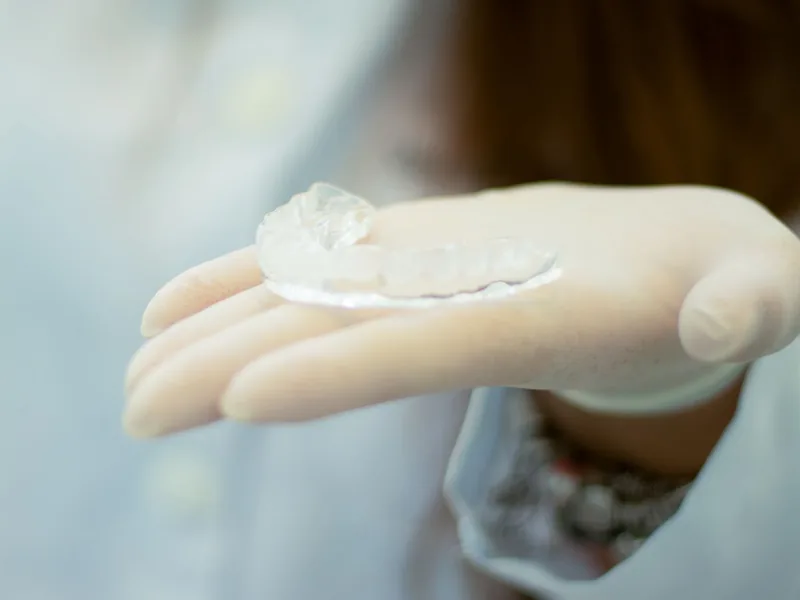
A smooth, hard acrylic splint made to fit your upper or lower teeth exactly. It is adjusted at follow-up visits so that your teeth meet it evenly.

Treatments · TMJ & splint therapy
Jaw pain, clicking, locking or grinding can come from the jaw joints (TMJ) and the chewing muscles. Dr Amna assesses the cause and explains the options, which may include a custom splint.
What it is
Temporomandibular disorders (TMD) affect the jaw joints, the muscles that move the jaw, or both. Common signs are pain in the jaw or face, clicking, limited opening, headaches around the temples, and grinding or clenching the teeth.
Many cases settle with simple, conservative care. A custom occlusal splint is one of the most widely used treatments: a hard, clear appliance that fits over the teeth, usually worn at night, to help the jaw muscles relax, spread the biting forces evenly and protect the teeth from grinding.
When it is used
Sudden severe pain, swelling, or a jaw that will not open or close needs prompt care: contact the clinic or seek urgent help.
Steps
Step 1
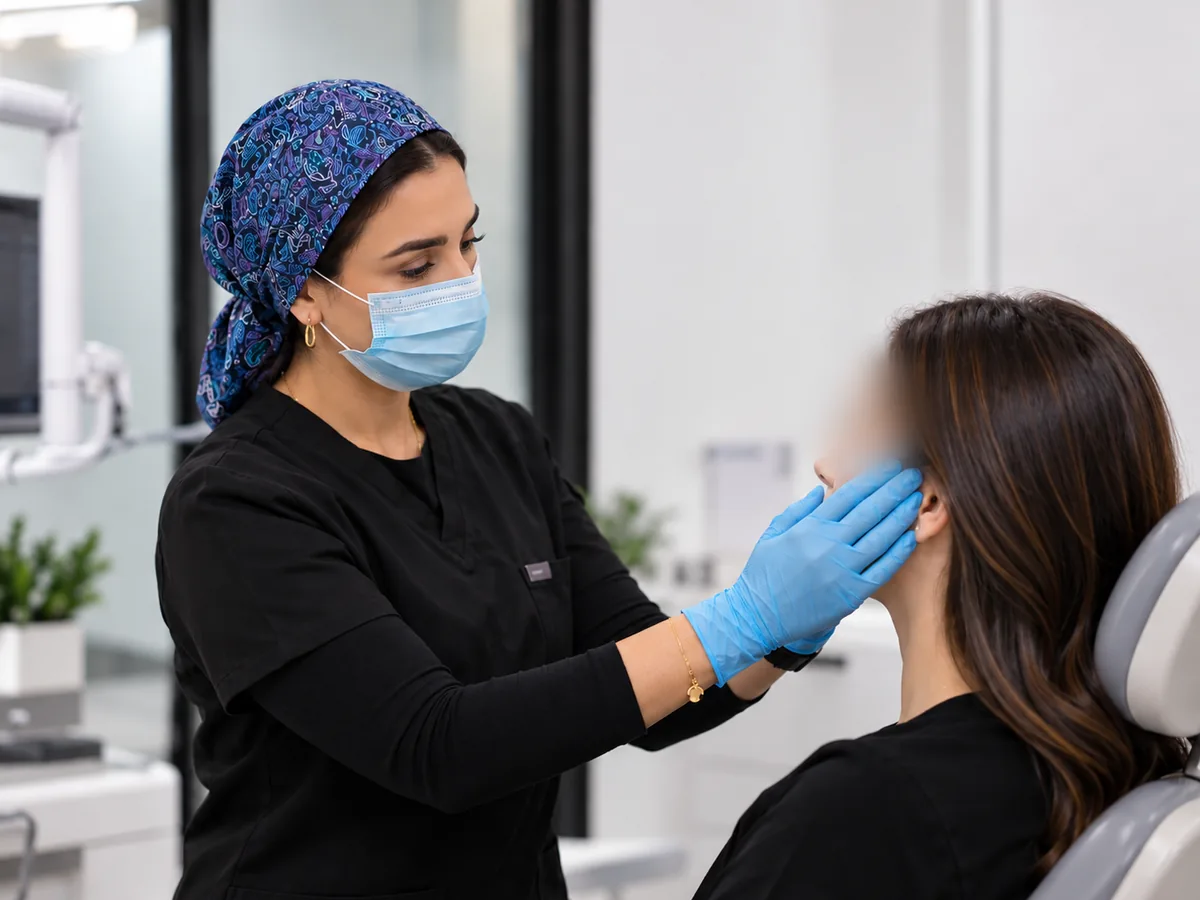
A detailed examination of the jaw joints, muscles, bite, and jaw movements to identify possible causes of pain or discomfort.
Step 2
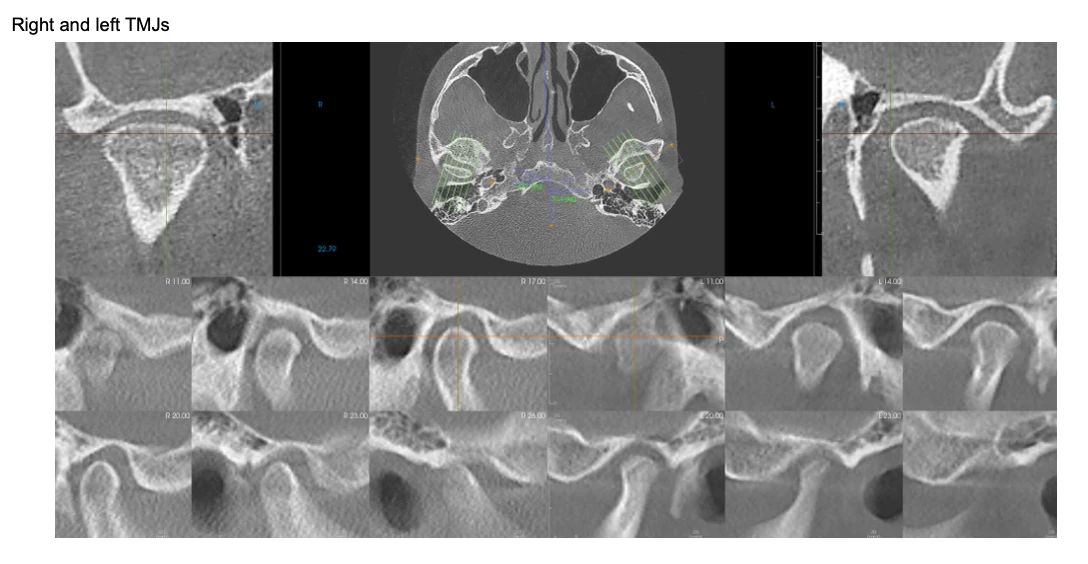
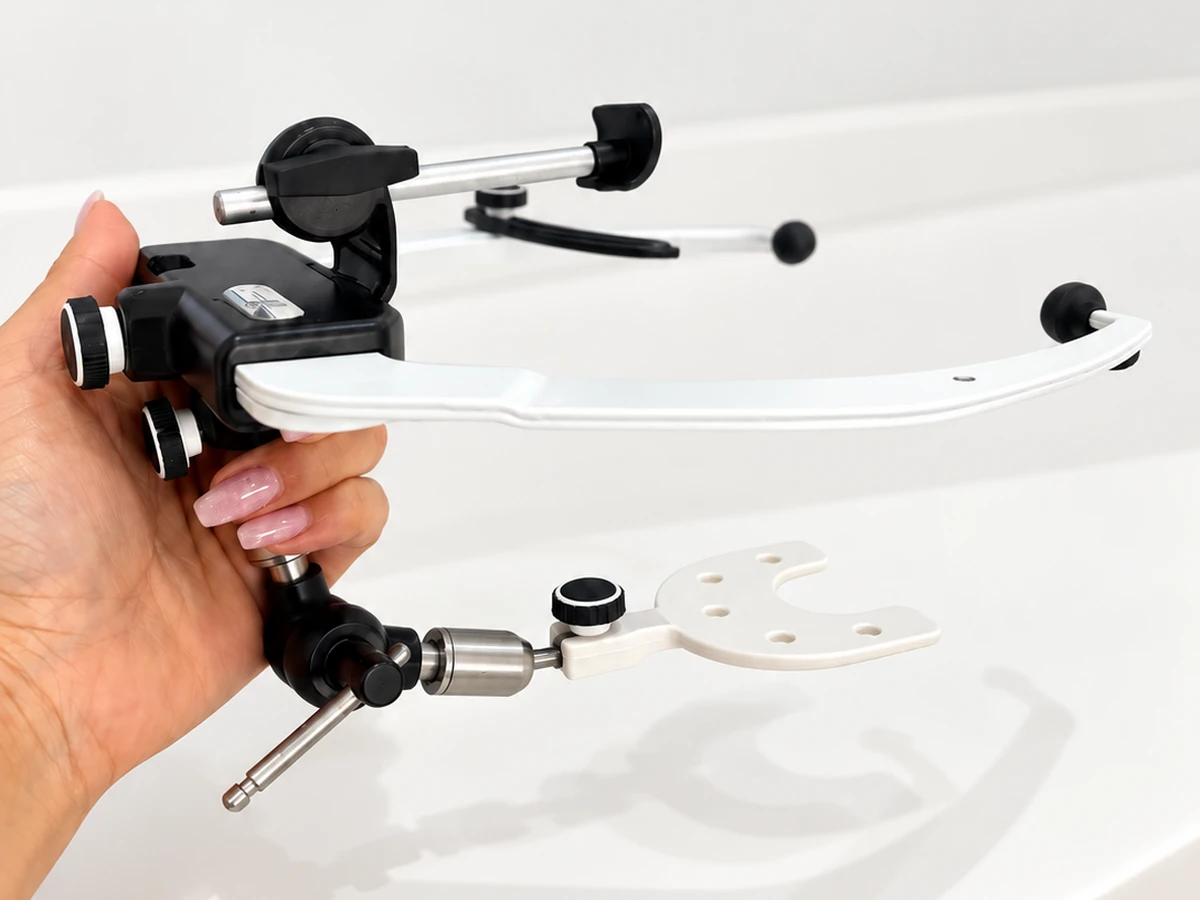
Additional diagnostic records, such as CBCT imaging, may be taken when indicated. A facebow transfer may also be used to help record the relationship of the upper jaw to the jaw joints for more detailed bite analysis.
When indicated, CBCT scans are referred to highly qualified international oral and maxillofacial radiologists specializing in TMJ imaging for a comprehensive evaluation and detailed radiological report. Patients also receive a copy of their full report, ensuring transparency and a better understanding of their condition and treatment plan.
Step 3
Dr. Amna prioritizes conservative, non-invasive treatments before considering more invasive options, such as Botox injections or surgery. Treatment may include lifestyle modifications, jaw exercises, physiotherapy, pain management, or a custom-made stabilization splint.
Step 4
Regular follow-up appointments to evaluate symptom improvement, jaw function, and adjust treatment as needed.
Our Philosophy
Dr. Amna believes in treating TMD with a conservative, evidence-based approach, focusing on relieving pain, restoring comfortable jaw function, and avoiding unnecessary invasive procedures.
Every mouth is different. Whether this treatment suits you, how long it may take and the fee are confirmed only after an in-person assessment with Dr Amna.
Types
Dr Amna explains which option fits your teeth and your daily life at your assessment.
A smooth, hard acrylic splint made to fit your upper or lower teeth exactly. It is adjusted at follow-up visits so that your teeth meet it evenly.
A facebow and articulator record how your jaws relate to each other, so the splint can be made to match your own bite.
Questions
A splint helps many people manage their symptoms and protects the teeth, but it is not a cure for everyone. Dr Amna explains what to expect for your case and reviews how you respond.
No. A sports mouthguard is soft and protects against knocks. A splint for TMD is hard, made precisely to your bite and adjusted over time.
Dr Amna asks about your concerns, examines your teeth, bite and jaws, and may take photos, a digital scan or X-rays if they are needed to plan treatment. She then explains your options, whether treatment is needed now, and the next steps.
The fee depends on your case and the type of treatment, so it is given to you after your assessment rather than listed online. Ask the clinic about payment options, such as monthly instalments, when you book.
Other treatments
Where
Book at whichever clinic is easier for you.
Jumeirah
 Wednesdays
Al Warqa · Wednesdays
Book
Message the clinic on WhatsApp and tell us which treatment and clinic suit you. The team will confirm a time with you.