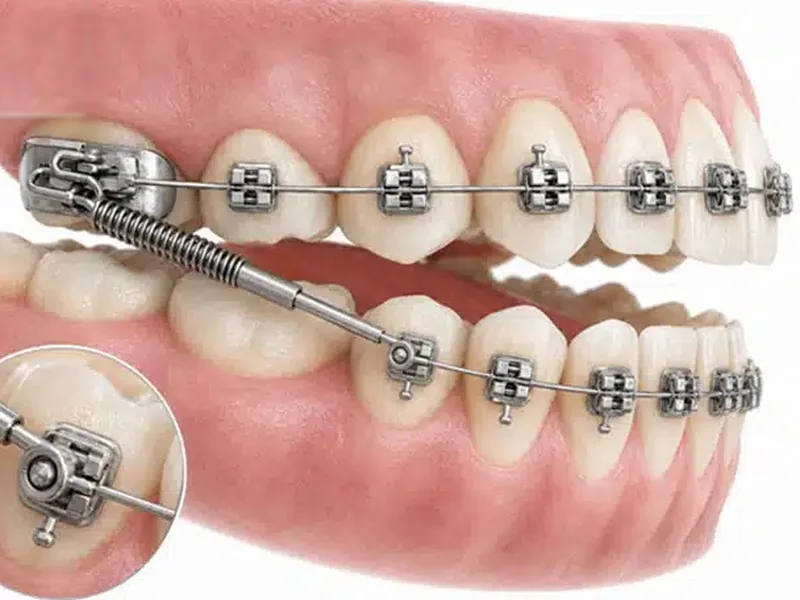
Class II correctors
For when the lower jaw sits too far behind the upper jaw, and the upper front teeth stick out. Functional appliances, removable or fixed, hold the lower jaw forward to encourage more balanced growth.
Treatments · Jaw and Bite Modification
When the upper and lower jaws are not growing in balance, the way they develop can often be guided while a child is still growing. Timing matters.
What it is
Jaw and bite modification (also called growth modification, or dentofacial orthopaedics) uses appliances that work with a child's natural growth to help the upper and lower jaws develop in a better relationship.
These appliances work best at the right stage of growth, which is why an early check is worthwhile. Dr Amna looks at the bite, the profile and the stage of growth before recommending anything, and explains plainly whether to treat now, wait or simply monitor.
Types
Dr Amna explains which option fits your teeth and your daily life at your assessment.
For when the lower jaw sits too far behind the upper jaw, and the upper front teeth stick out. Functional appliances, removable or fixed, hold the lower jaw forward to encourage more balanced growth.
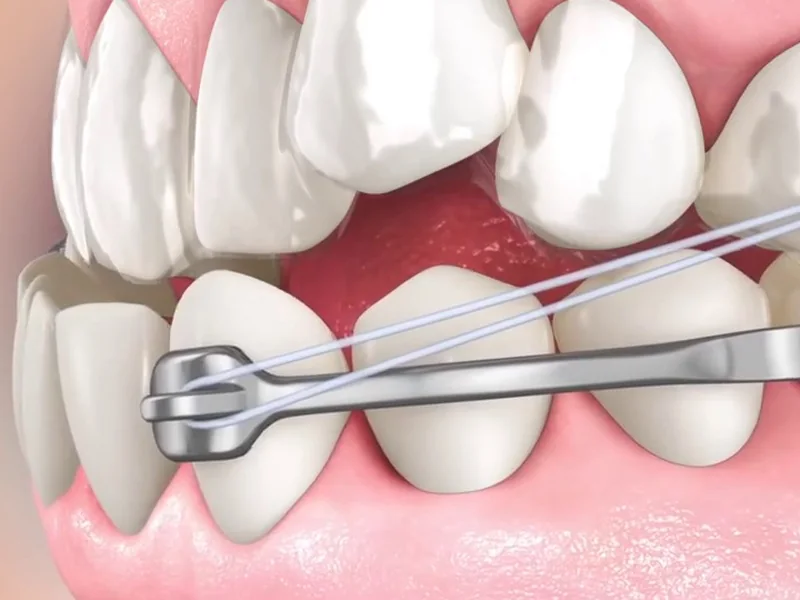
For when the lower jaw sits ahead of the upper jaw, or there is an underbite. These appliance help correct the bite along with orthodontic treatment.
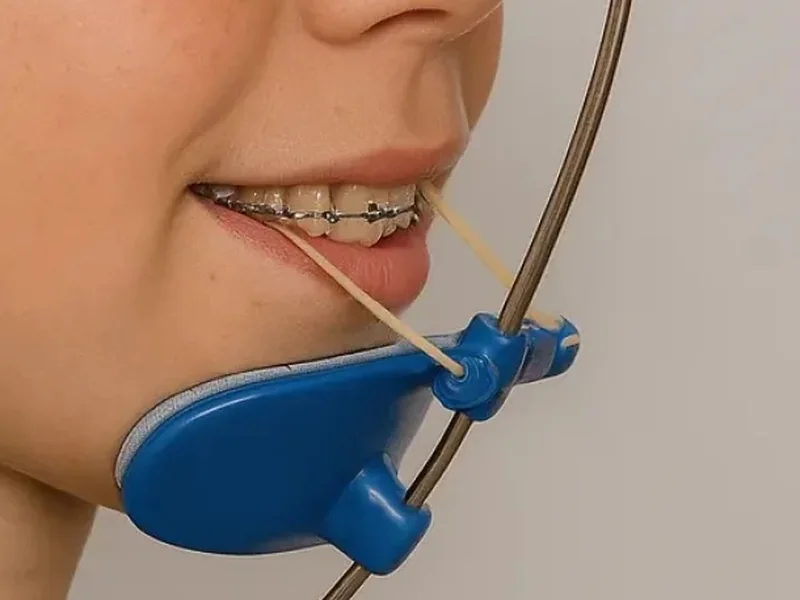
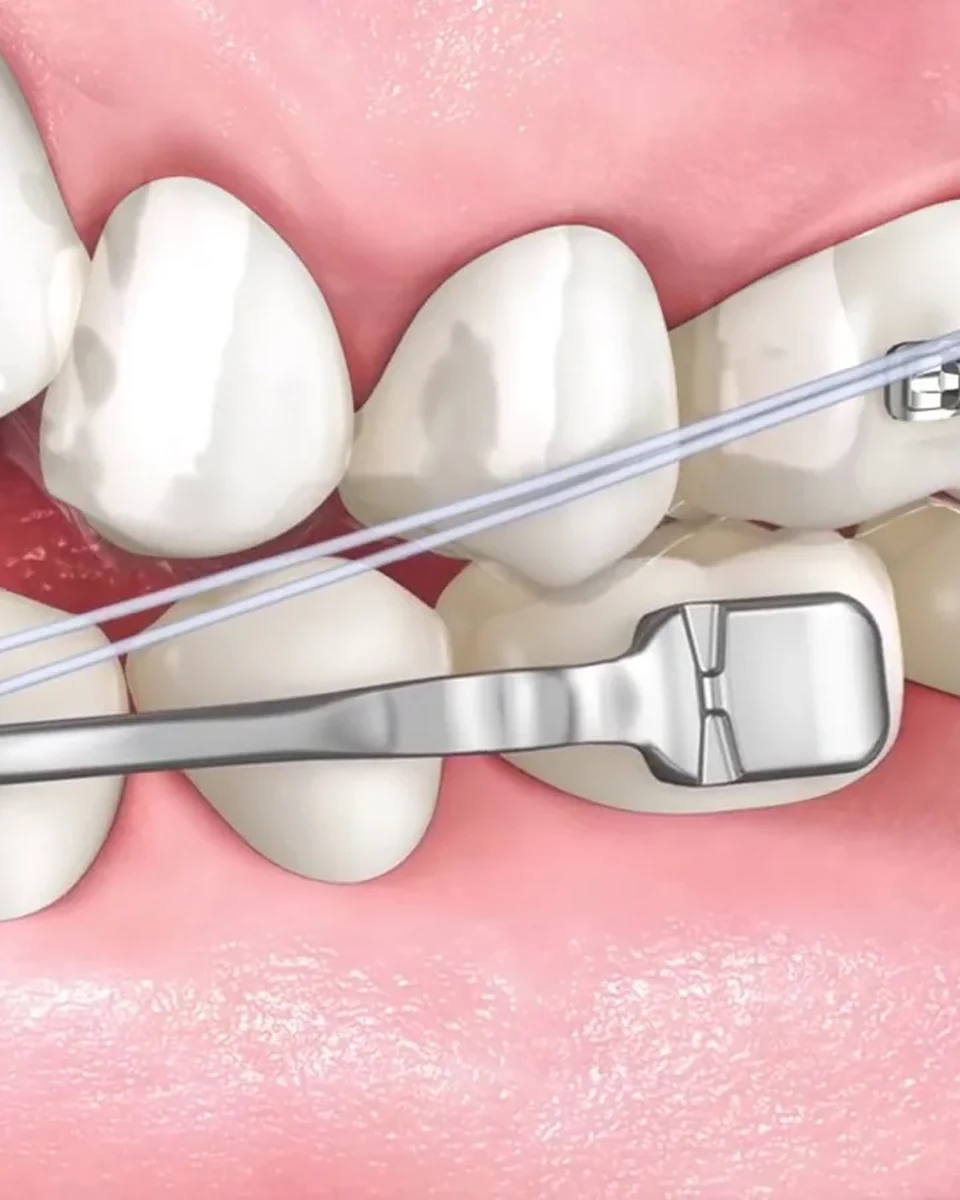
A reverse-pull headgear, worn at home and overnight. It attaches by elastics to an appliance inside the mouth and encourages the upper jaw forward in young children with an underbite.
Photos: Dr Amna's clinic. Full list in credits.
For children
Which appliance suits a child, and when, is decided at the assessment, after looking at the bite, the profile and the stage of growth.
Not every bite problem needs the jaws themselves to be guided. In growing children, a bite corrector is a simple appliance, removable or fixed, that helps correct the way the upper and lower teeth meet: an overjet (upper front teeth sitting too far ahead), a deep bite, a crossbite, or a bite that shifts to one side.
Some of these appliances mainly move the teeth and the bone that holds them (dentoalveolar changes), rather than changing how the jaws grow. That is often exactly what is needed, and it is one of the reasons an early check is worthwhile: the right appliance at the right stage of growth can make later treatment simpler.
Dr Amna explains plainly whether a bite corrector, a growth-guiding appliance, or simply monitoring is the right step for your child.
When it is used
Results depend on growth and on how well the appliance is worn, so Dr Amna explains what is realistic for your child at the assessment.
Steps
Every mouth is different. Whether this treatment suits you, how long it may take and the fee are confirmed only after an in-person assessment with Dr Amna.
Questions
It depends on the problem and on each child's growth. Some problems, such as an underbite, are often treated earlier; others are best treated around the growth spurt. An early check from age 6 tells you the right timing for your child.
Dr Amna sees children from age 6. An early check does not mean early braces. Many children only need monitoring, and the visit tells you whether anything needs attention now, later, or not at all.
It depends on what needs to be corrected, the type of appliance and how consistently it is worn. Some courses of treatment take months, others take longer. Dr Amna gives you an estimated timeline at your assessment; it is an estimate, not a guarantee.
Dr Amna asks about your concerns, examines your teeth, bite and jaws, and may take photos, a digital scan or X-rays if they are needed to plan treatment. She then explains your options, whether treatment is needed now, and the next steps.
Other treatments
Where
Book at whichever clinic is easier for you.
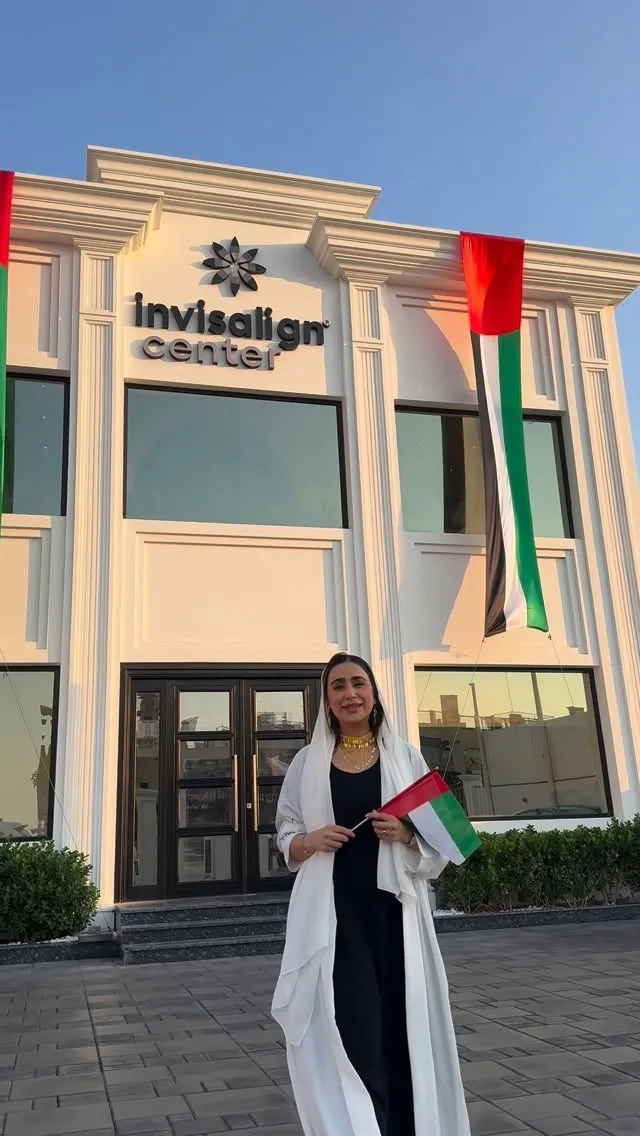
Jumeirah
 Wednesdays
Al Warqa · Wednesdays
Book
Message the clinic on WhatsApp and tell us which treatment and clinic suit you. The team will confirm a time with you.