
Treatments · Orthodontic appliances

Orthodontic appliances, for a specific job.

Some problems need an appliance before, or alongside, braces or aligners. Dr Amna uses one only when it is the right tool for the problem.

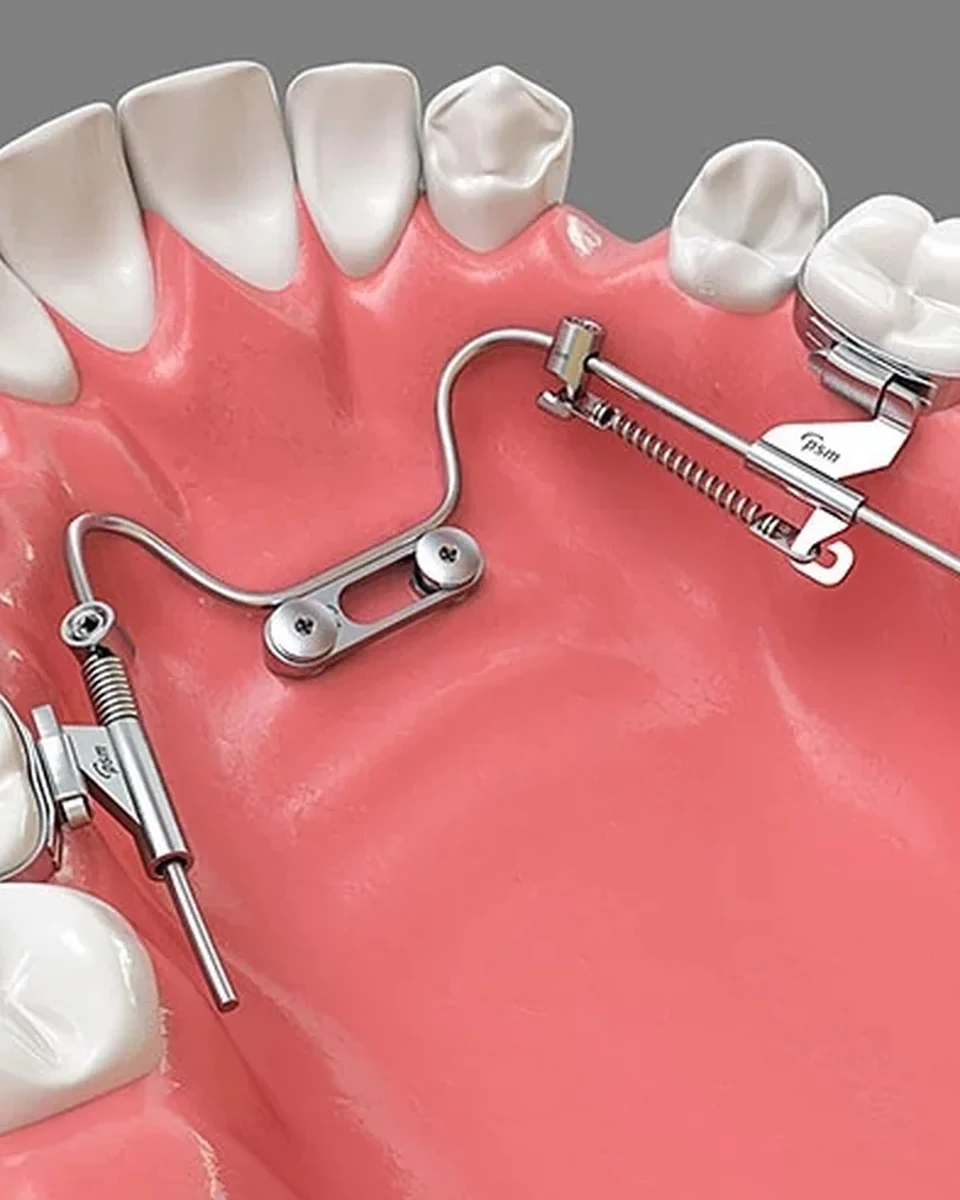
An intraoral distalizer on a model of the upper teeth

What it is

Orthodontic appliances, in plain words.

Orthodontic appliances are custom-made devices that widen a narrow jaw, create space for crowded teeth, or move the back teeth into a better position. Some are fixed to the teeth; others can be taken out.

They are used most often in growing children, when the jaws respond best, and sometimes in teens and adults as one part of a wider plan with braces or aligners.

Types

Two main appliances.

Dr Amna explains which option fits your teeth and your daily life at your assessment.

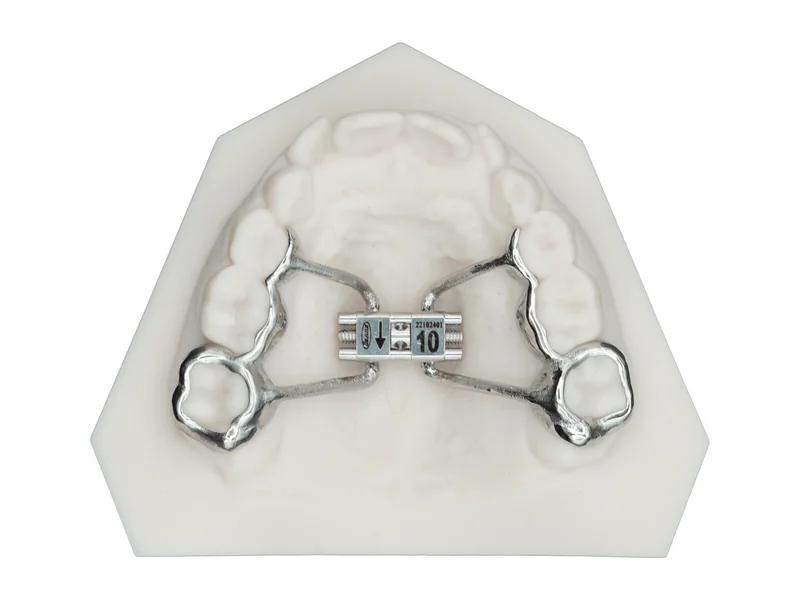
A 3D-printed metal palatal expander on a model of the upper teeth

Expanders

Widen a narrow upper jaw, most effectively while a child is still growing. A fixed expander is attached to the back teeth; a removable expansion plate can be taken out. A small screw in the middle is turned on a set schedule to widen the jaw gradually.
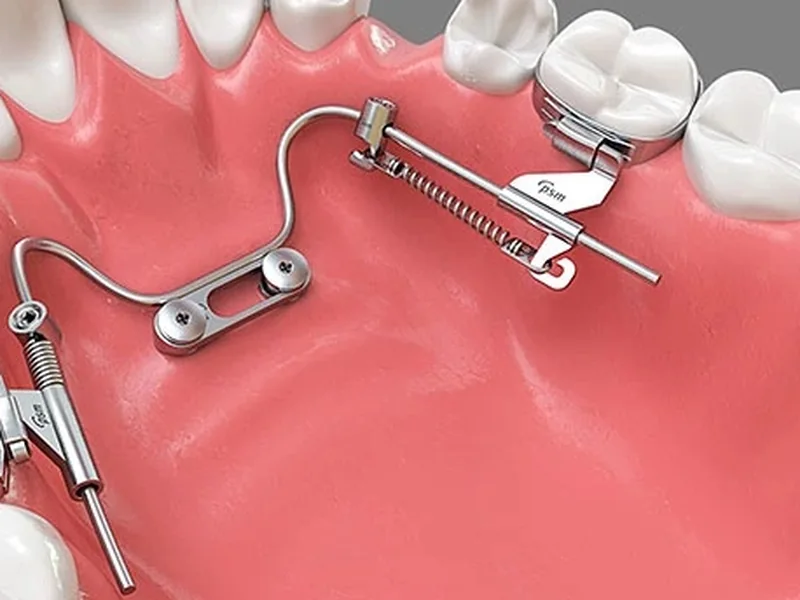
An intraoral distalizer: springs that move the upper back teeth backwards

Intraoral distalizers

Fixed appliances inside the mouth that move the upper back teeth gently backwards, to create space for crowded front teeth. In some cases this can reduce the need to remove teeth. Nothing shows on the face.

Photos: Dr Amna's clinic. Full list in credits.

When it is used

Who it may suit.

Whether an appliance is needed, and which one, is decided only after Dr Amna has examined your child or you.

  • A narrow upper jaw or a crossbite
  • Crowding, when more space is needed for the teeth
  • Upper back teeth that have drifted forward
  • A first phase of treatment before braces or aligners

Steps

What to expect.

Every mouth is different. Whether this treatment suits you, how long it may take and the fee are confirmed only after an in-person assessment with Dr Amna.

  1. Assessment. An examination, with photos, a scan or X-rays if needed, to confirm what the appliance should do.
  2. Scan and fitting. A digital scan or impression, then the appliance is made in the lab and fitted at a short visit.
  3. Activation. Some appliances are adjusted at home, for example a parent turning an expander screw as shown in the clinic. Others are adjusted by Dr Amna.
  4. Reviews. Check-ins every few weeks to follow progress and make adjustments.
  5. Next phase. The result is held in place, and braces or aligners follow if they are needed.

Questions

Common questions.

Does an expander hurt?

Most children feel pressure in the teeth, nose or cheeks for a few minutes after each turn, and some notice a small gap appear between the front teeth. This is expected and usually settles quickly.

At what age should my child have an orthodontic check?

Dr Amna sees children from age 6. An early check does not mean early braces. Many children only need monitoring, and the visit tells you whether anything needs attention now, later, or not at all.

Does orthodontic treatment hurt?

Most people feel pressure or mild soreness for a few days after braces are fitted, after an adjustment, or when they start a new set of aligners. It is usually manageable and settles as the teeth get used to it. Dr Amna will tell you what to expect and how to stay comfortable.

How much does treatment cost?

The fee depends on your case and the type of treatment, so it is given to you after your assessment rather than listed online. Ask the clinic about payment options, such as monthly instalments, when you book.

Other treatments

Where

Two clinics in Dubai.

Book at whichever clinic is easier for you.

Book

Ready for an assessment?

Message the clinic on WhatsApp and tell us which treatment and clinic suit you. The team will confirm a time with you.

Book on WhatsApp