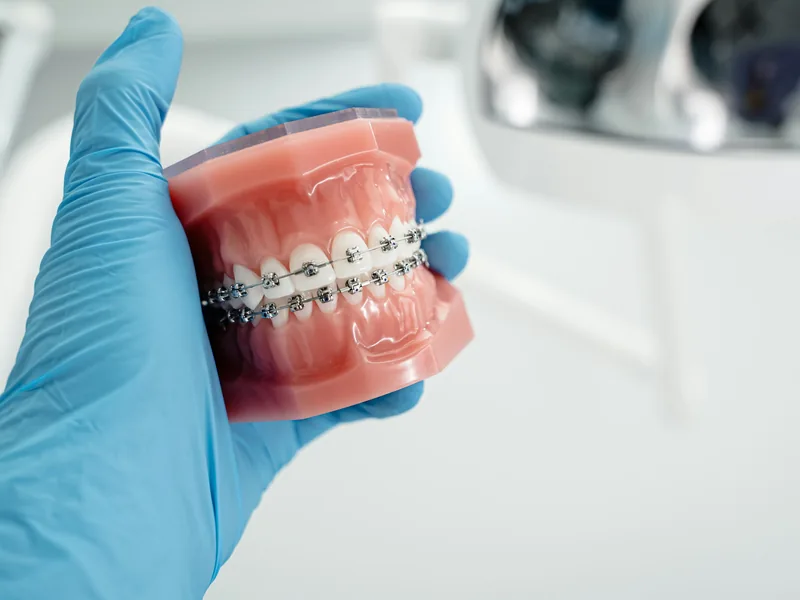
Metal braces
Stainless-steel brackets. Strong, dependable and suited to a wide range of cases.

Treatments · Braces
Fixed braces give precise control over how each tooth moves. Dr Amna offers metal, ceramic and self-ligating braces for children, teens and adults.
What it is
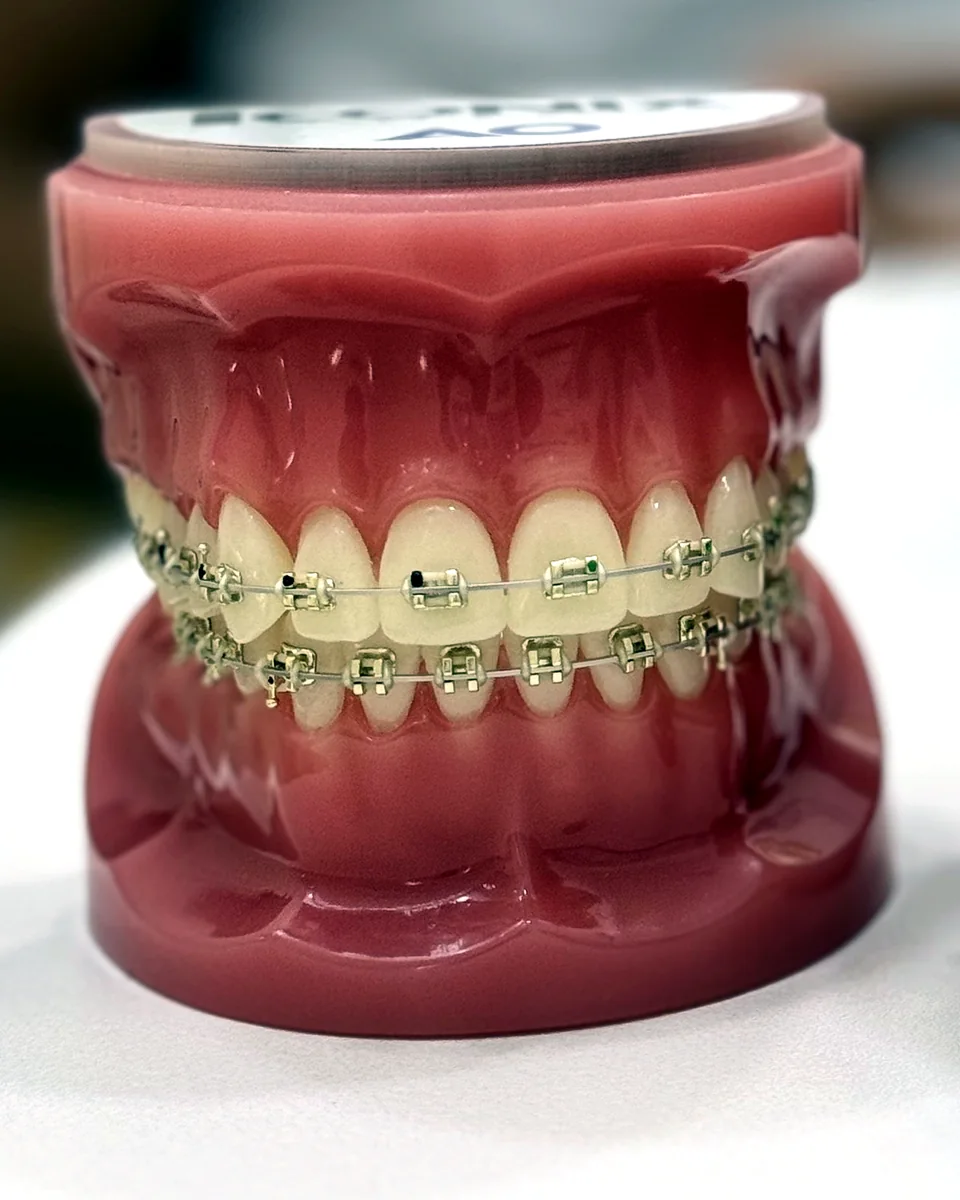
Braces are small brackets bonded to the front of the teeth and joined by a thin wire. At regular visits Dr Amna adjusts the wire, and the teeth move gradually along a planned path.
Braces stay on for the whole treatment, so they work around the clock without you having to remember to wear them. That makes them a reliable choice for many cases, from simple to complex.
Types
Dr Amna explains which option fits your teeth and your daily life at your assessment.
Stainless-steel brackets. Strong, dependable and suited to a wide range of cases.
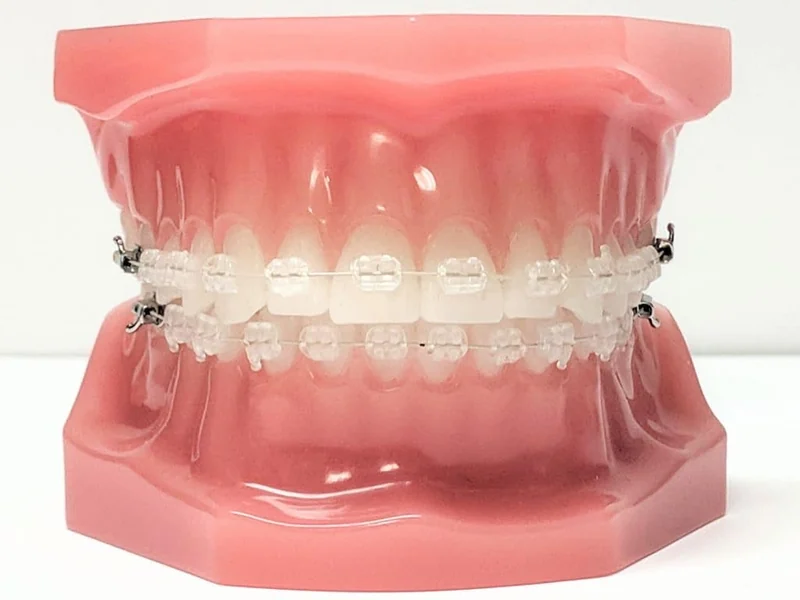
Tooth-coloured brackets that are much less noticeable and work in the same way as metal. They need a little care with strongly coloured food and drinks.
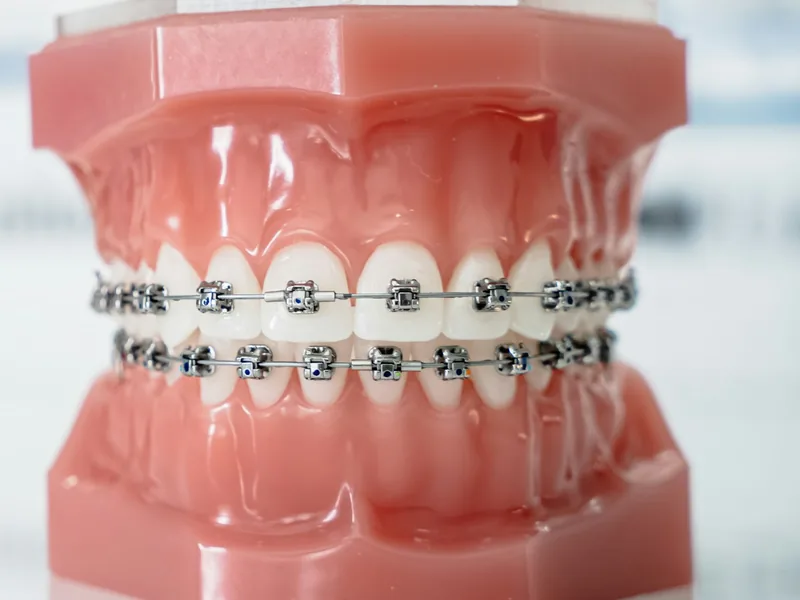
Brackets with a small built-in clip that holds the wire, so no elastic ties are needed around each bracket.
When it is used
Dr Amna recommends the type of braces that fits your teeth, your bite and your daily life after examining you.
Steps
Every mouth is different. Whether this treatment suits you, how long it may take and the fee are confirmed only after an in-person assessment with Dr Amna.
Questions
The ceramic brackets themselves resist staining, but the small elastic ties on some braces can pick up colour from coffee, tea, curry or smoking. Ties are replaced at adjustment visits.
Most people feel pressure or mild soreness for a few days after braces are fitted, after an adjustment, or when they start a new set of aligners. It is usually manageable and settles as the teeth get used to it. Dr Amna will tell you what to expect and how to stay comfortable.
Neither is better for everyone. Both can treat many of the same problems. Some cases are more suited to braces, and some patients prefer aligners because they are removable and less visible. Dr Amna explains the options that genuinely fit your teeth after examining you.
Most patients are seen every 4 to 8 weeks, depending on whether they have braces or aligners. If you travel or live outside Dubai, ask about planning your visits around your schedule.
Other treatments
Where
Book at whichever clinic is easier for you.
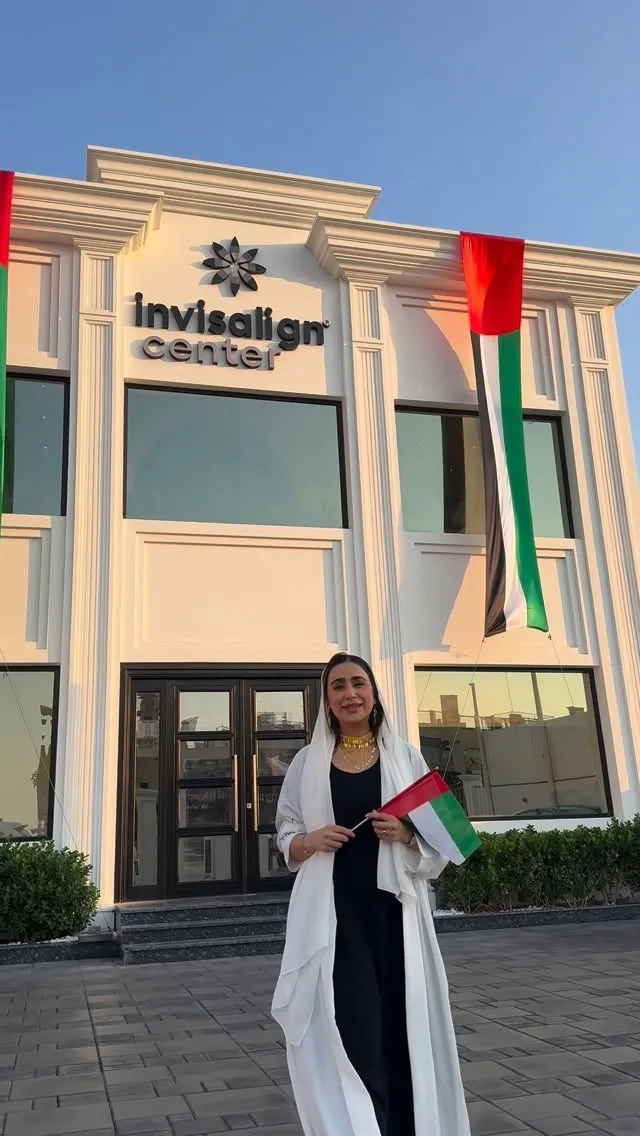
Jumeirah
 Wednesdays
Al Warqa · Wednesdays
Book
Message the clinic on WhatsApp and tell us which treatment and clinic suit you. The team will confirm a time with you.